
How to Get Morris County Court Records
A local Tyler Public Access link can give you a Case Summary when one is available. It is a starting point, nothing more. For a complete search and real copies, go through the clerk. The District Clerk holds felony, family, divorce, child support, adoption, court orders, and district civil, juvenile, and CPS matters. County Clerk records cover county misdemeanors and probate. JP and city records stay with those courts.
- Identify the court, cause number, approximate year, parties, and exact record.
- Call the proper clerk to confirm custody, access, current fee, and accepted delivery route.
- Use Tyler or re:SearchTX for applicable online material, or inspect the file at the clerk counter.
- Submit a narrow written request when required; ask whether mail or email is currently accepted.
- Choose a plain or certified copy, pay by an accepted method, and verify the result.
Morris County offers no universal mail form, no single request email, no processing promise, and no confirmed public terminal. Each clerk sets its own path. The District Clerk's procedures do allow emailed copies, though hearing notices, motions, and orders must be e-filed rather than sent by ordinary email or fax. Call before you mail or fax anything.
Two Morris County Court Record Custodians
District Clerk Gwen Ashworth sits at 500 Broadnax Street, Suite J, Daingerfield, Texas 75638. Her phone is 903-645-2321. The County Clerk is Brittany Andrews, Suite D at the same address, phone 903-645-3911. Counter hours run weekdays from 8:00 a.m. to noon. The afternoon window is 1:00 to 4:30 p.m. Weather or unforeseen events can close courthouse offices. A quick call first saves a wasted trip.
Morris County District Clerk
500 Broadnax Street, Suite J
Daingerfield, TX 75638
903-645-2321
Morris County Clerk
500 Broadnax Street, Suite D
Daingerfield, TX 75638
903-645-3911
The official Morris County Clerk page lists its record categories, request instruction, portal, and fee links.
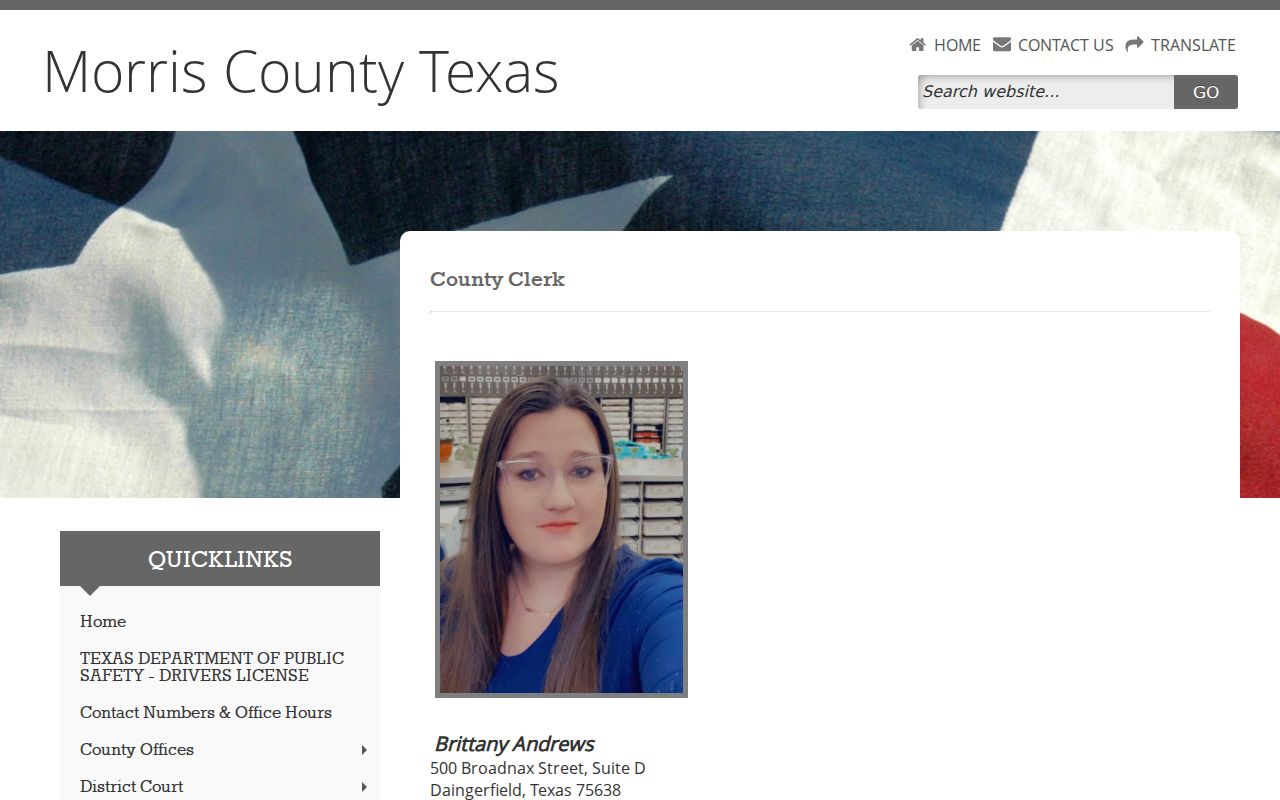
Two different clerks hold Morris County court records. The District Clerk keeps the register for the 76th and 276th District Courts. That office is not the same as the County Clerk's county-level shop.
Pick the right suite before you file a request. Suite D takes district civil, family, juvenile, and felony files. Suite J is where county misdemeanor and probate cases live. Sending a request to the wrong desk gets it bounced or slowed.
Help the clerk help you. Give the court name and party names. Add the case number if you have it, a rough year, and the exact item you want. Ask what kind of copy you will get: plain, file-marked, or certified. Each is a different product, and the charges can differ. One more tip on the docket. If the online Case Summary skips an older event, note that in your request. Do not assume the blank means no paper file exists.
Types of Morris County Court Records
Name the record you want. A broad request for everything about a person tends to stall. The chronological register, the filed paper, and an official copy each serve a different purpose. Common Morris County court records include:
- Case Summaries, docket sheets, and registers of actions
- Petitions, complaints, answers, motions, citations, and returns
- Signed orders, judgments, and abstracts of judgment
- Criminal misdemeanor, felony, and disposition records
- District civil, family, juvenile, and CPS records where access permits
- County probate records and municipal or JP citation files
Transcripts may call for the court reporter rather than the clerk. Exhibits can carry their own access and handling limits. A federal or bankruptcy file goes through the Marshall Division and PACER or CM/ECF, not either Morris County clerk.
Three Layers of a Morris County Court Record
One record has three layers. The first is the search index or case header. The second is the docket, a dated sequence of filings, settings, orders, and dispositions. The third layer is the filed record itself. A free Case Summary does not promise access to every filed image, and the District Clerk warns that summaries are limited and may omit older cases.
| Cause number | The clerk identifier for retrieval and requests. |
|---|---|
| Case style | The caption naming parties and their court roles. |
| Pleadings | Petitions, answers, motions, and other filed requests. |
| Docket sheet | The chronological list of case events. |
| Orders and judgments | The judge-signed text behind outcome entries. |
| File mark | The clerk's official accepted filing date and time. |
An "order signed" line tells you nothing about the terms. Ask for the signed order itself. In the same way, a setting is only a scheduled event. It is not proof of any result. The separate Morris County case search can locate a case before you request documents.
Morris County E-Filing and File Marks
eFileTexas is a filing system, not an open docket search. A filer picks an electronic filing service provider and sends an envelope with documents. Charges apply. After clerk acceptance, the filer receives a timestamped, file-marked copy. Morris County's 2025 District Clerk procedures direct hearing notices, motions, and orders through e-file. Email and fax are not the route. The official eFileTexas landing page explains this statewide filing route.
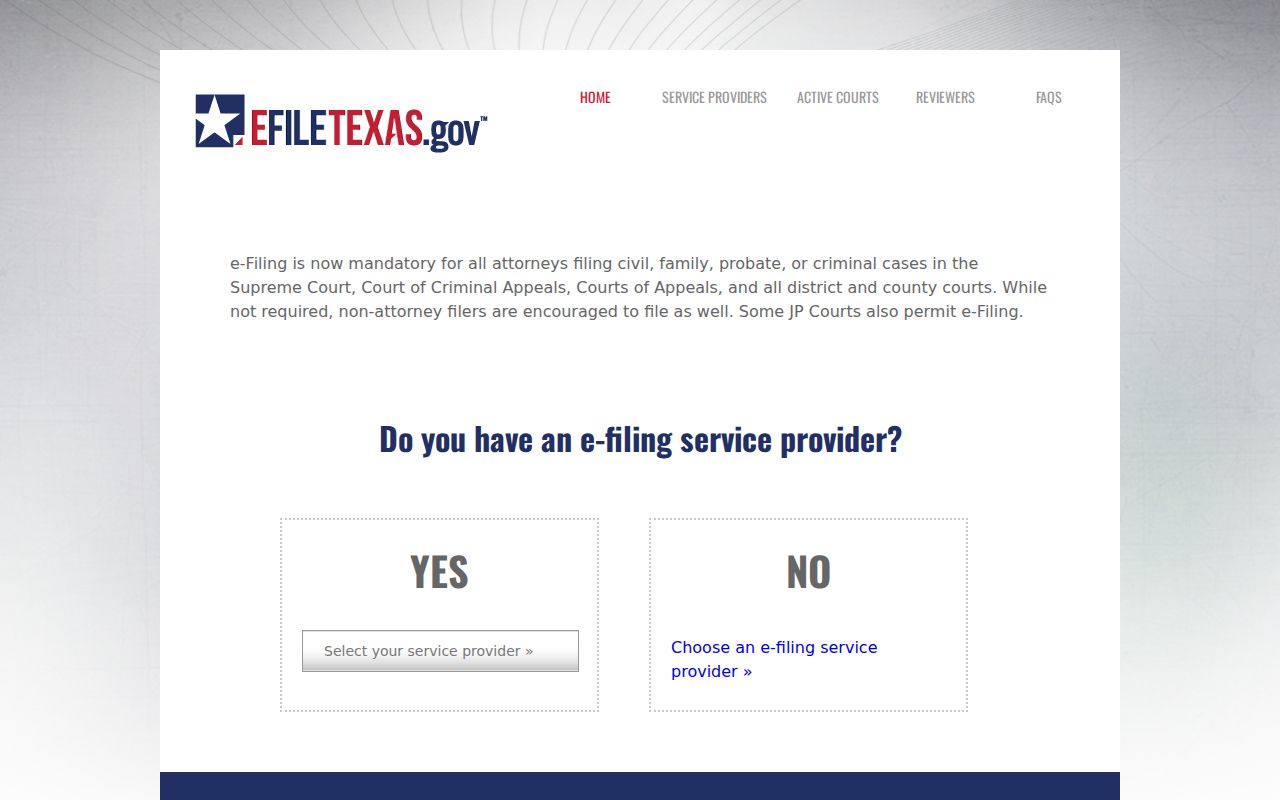
That accepted file mark proves when a document entered the court file. By itself, it shows nothing about a later ruling or disposition.
Morris County Certified Copies and Fees
A plain copy simply reproduces the record. A certified copy carries the clerk's formal certification, and some recipients require it. Confirm your purpose before ordering. The District Clerk publishes no reliable current certification or exemplification amount, so ask the office directly. Its procedures do list two copy rates.
| Item | Published amount |
|---|---|
| District Clerk copy emailed | $0.10 per page |
| District Clerk extra office-produced copy | $1 per page |
| County Clerk criminal search | $5 per name |
| County Clerk probate search | $5 per name |
| Plain marriage record | $1 |
| Certified marriage record | $10 |
| Certified plat copy | $10 |
| Current district certification fee | Confirm with District Clerk |
Payment at the County Clerk counter is simple enough. Bring a money order, a cashier's check, cash, or a credit card.
Two cautions on fees. Recording and vital-record charges do not double as district civil or felony copy fees. So budget for the right schedule. And copies you walk in with cannot be certified there, no matter what the published fee list says.
Written Morris County Court Record Requests
The Morris County Clerk takes public-information requests in writing. Texas Attorney General guidance backs that practice. One boundary matters here. State law does not open court case records or judicial records just because a request carries a Texas Public Information Act label. Texas Government Code §552.0035 treats the judiciary differently. Judicial records within Rule 12 follow that rule along with other governing law.
Shape the request before you send it. Name the right office and describe one precise record. Give the cause number and the approximate filing year if you know them. State the copy type and a way to reach you. Leave out sensitive details the clerk does not need. Ask how to pay and whether you can submit by mail, email, or in person. Morris County offers no single all-purpose form and makes no response-time promise.
Statewide Morris County Document Coverage
re:SearchTX can stretch case and document access statewide where its coverage reaches. It works as a supplement to the local Morris County system. The Texas Judicial Council's 2024 report describes substantial civil-document coverage. But it says criminal case records are excluded. Account registration or document purchase may apply. A statewide result does not change which Morris County clerk certifies a local record.
The official re:SearchTX interface is the statewide access point for those documents.
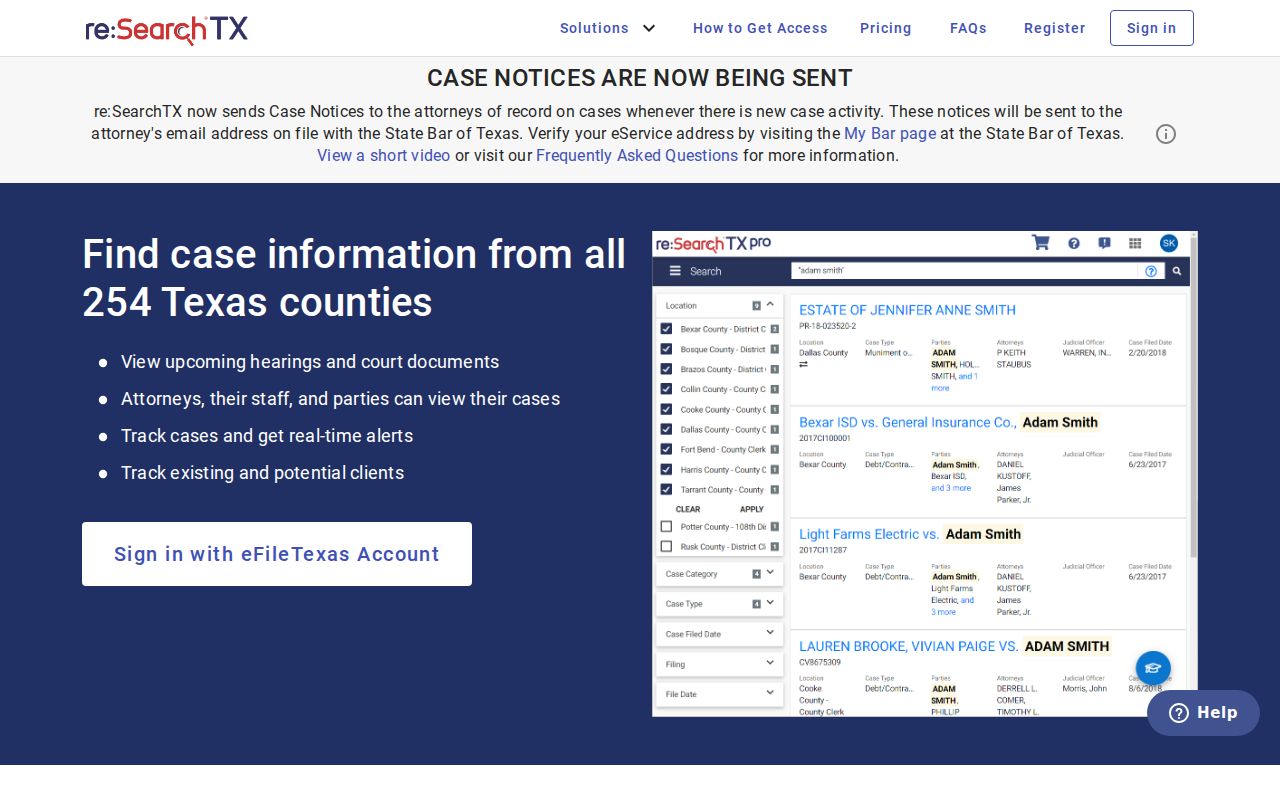
Verify Morris County's coverage, then seek certified copies from the local clerk.
Public Access to Morris County Court Records
A link on the portal does not decide access. The record itself does. Morris County court records carry different rules depending on what they hold. Rule 21c requires listed sensitive data to be redacted. Civil Rule 76a sets the procedure and standard for sealing civil court records, while juvenile records fall under Family Code Chapter 58. Criminal expunction works differently, governed by Code of Criminal Procedure Chapter 55A.
Key Texas rules: Rule of Judicial Administration 12 governs written access requests for judicial records within its scope. Government Code §552.0035 explains the judiciary boundary. Civil Rule 76a controls civil sealing procedure.
A missing online document proves nothing about sealing. The paper court record may simply be old, unindexed, or held at another office. Some filings are available only at the counter. If the clerk denies access, ask which rule, statute, or order controls. Also ask what procedure an authorized requester can use to obtain the court record.
When Morris County Records Are Older
The District Clerk warns that older cases may not show up in online docket summaries. Call the right office with the court, the approximate year, the parties, and a description of the record you need. Ask about self-service terminals, off-site retrieval, and turnaround times directly. None of these is fixed or posted.
Morris County's record chain runs from paper preservation to clerk counters, Tyler summaries, and e-filing. The County Clerk fee schedule builds a $10 records archive component into the first-page recording total. A county notice says that archive funding supports preservation. That is not a special court-copy fee. It does explain why an old paper court record and a modern online index may take different retrieval steps.